Anecdotally, one would be tempted to infer the existence of a strong positive relationship between higher food prices and poverty. After all, it is the poor who spend a higher share of their food on basic staples and have the least means to buy food with their meager income. And several studies using the available, imperfect data tend to confirm that relationship.
This is despite the fact that three quarters of poor people live in rural areas and the majority of them earn their living from farming. Some poor farmers produce more food than they consume and hence benefit from higher prices, but many others are net buyers of food and hence lose out when food prices rise. But identifying which households gain and which lose, and hence the overall impact on poverty, requires knowledge of this relationship for all vulnerable households. A major problem is that we still lack the data for accurately gauging who, for a given level of production and pattern of food consumption and purchases, is more likely to be negatively impacted by higher food prices.
From a post by Gero Carletto over at the Development Impact blog.
This is a point that is too often forgotten by nonexperts when discussing the effects of high food prices: that rising food prices (much like food price volatility) generates winners and losers.
At least, that is the answer my coauthor Ken Lee and I come up with in a new article titled “Look Who’s Talking: The Impacts of the Intrahousehold Allocation of Mobile Phones on Agricultural Prices,” forthcoming in the Journal of Development Studies.
More specifically, in a sample of onion farmers in the Philippines, we look at whether there is a statistically significant relationship between whether anyone in a household owns a mobile phone and the price received by that household for its onions.
Failing to find any statistically significant association between the two, we then look at whether there is a statistically significant relationship between whether (i) the household head owns a mobile phone, (ii) the household head’s spouse owns a mobile phone, or (iii) any of the children in the household own a mobile phone and the price received by that household for its onions.
I was not planning on blogging about this, but an email last week from my colleague Nicholas Magnan telling me he wanted to run the Trading Game — a simple in-class experiment I run with the students in my principles of microeconomics class every year to show them that trade leaves no one worse off — in his own classes and asking me whether I had written anything about this made me realize I should probably share this with other teachers of economics.
Protocol
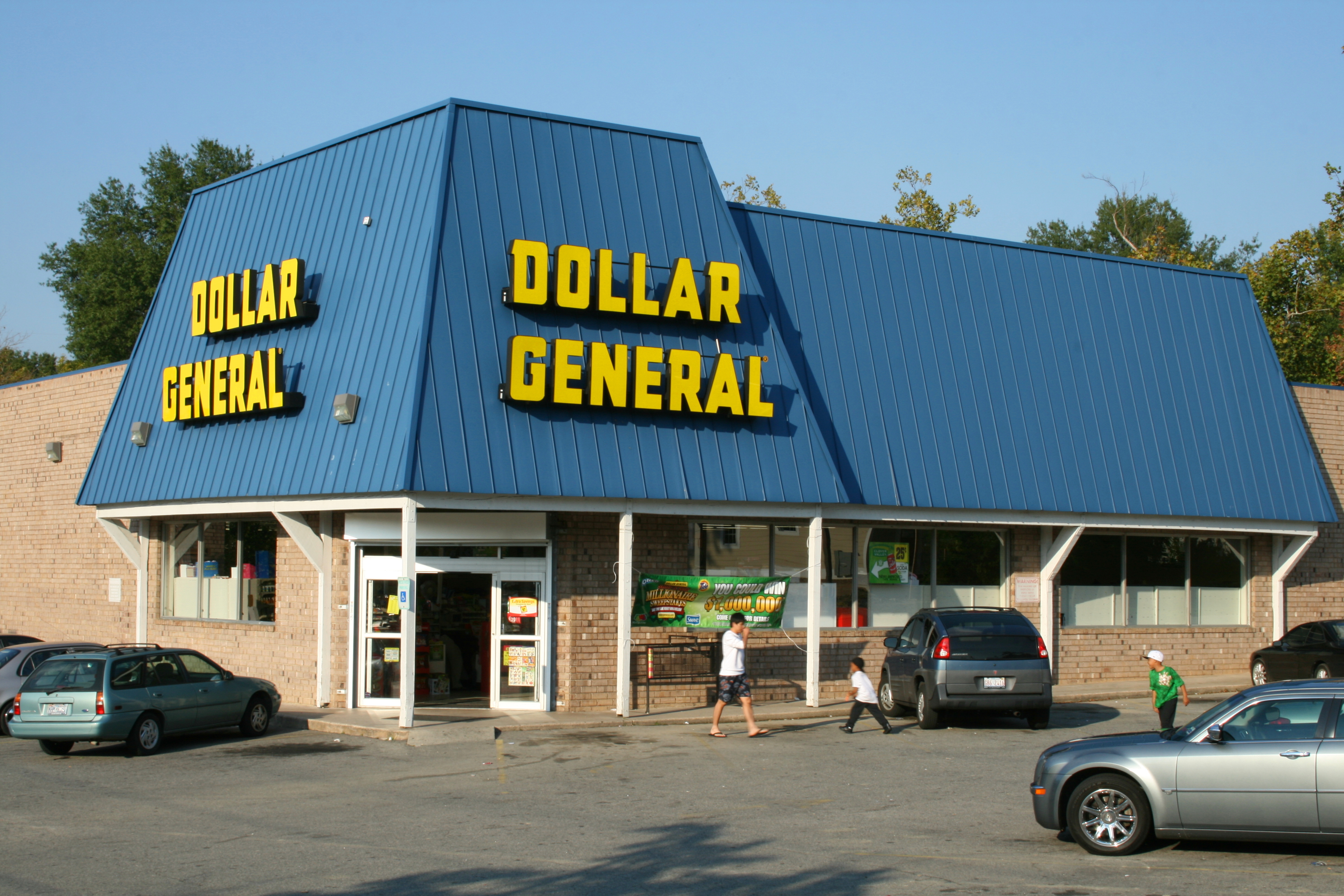
The Trading Game is pretty simple. Before the start of every semester I have to teach principles of microeconomics, I look at the number of students enrolled in my class, and I head out to the nearest dollar store to buy an equal amounts of trinkets.
As luck would have it, WikiMedia Commons has a picture of the very place in Durham where I buy all of my Trading Game trinkets:
(Source: WikiMedia Commons.)
The trinkets I buy are all in the $1-to-$3 range, and they consist largely of toys. This year’s trinket harvest yielded a Toys (as in the movie) puzzle, glow sticks, Donald Duck stickers, fake tattoos, miniature plastic animals, toy dinosaurs, etc. For a group of 50 student, I usually spend no more than $100 of the allocation I receive for my course.
Then, when I want to run the Trading Game in the wake of teaching students about how trade can make everyone better off in context of chapter 1 of Mankiw’s Principles of Microeconomics, I go around allocating trinkets to students at random.
I then ask students to assign a value to the trinket they have just received ranging from 0 to 10, with higher values meaning cooler trinkets.
We then go around the room recording those values. Because students often bring their laptops to lecture, it is easy to find a volunteer to record those values, but you can have a teaching assistant do it. Once all values are recorded, total welfare (i.e., the sum total of the values students assign to their trinkets) is announced.
I then tell students that they have five minutes to trade voluntarily between themselves, insisting on the fact that trades must be voluntary (i.e., no stealing) and cannot involve dynamic aspects, or credit (i.e., no “I’ll give you my cool dinosaur if you give me your awful trinket and you buy drinks on Friday night.”)
Once students are done trading, we once again go around the room recording the values they assign to their trinkets. Once all values are recorded, total welfare is announced once again.
And that’s usually where the magic happens. When I ran the Trading Game last week, my class’ “aggregate welfare” went from 128 to about 180, if I recall correctly, and you could just see that it had become obvious to students that (in this context of well enforced property rights) trade not only left no one worse off, but it increased aggregate welfare.
If I’d wanted to do things more convincingly, I would’ve asked the student who recorded values in a spreadsheet to test whether the two values were statistically different from one another.
I cannot take credit for the Trading Game, as I first learned about it in 1999, when I played it at a colloquium for student leaders organized by a Canadian free-market think-tank (yes, those actually exist).