Skip to content

Marc F. Bellemare Posts

New Article: The Welfare Impacts of Commodity Price Volatility

188568_17914899528_8227_n

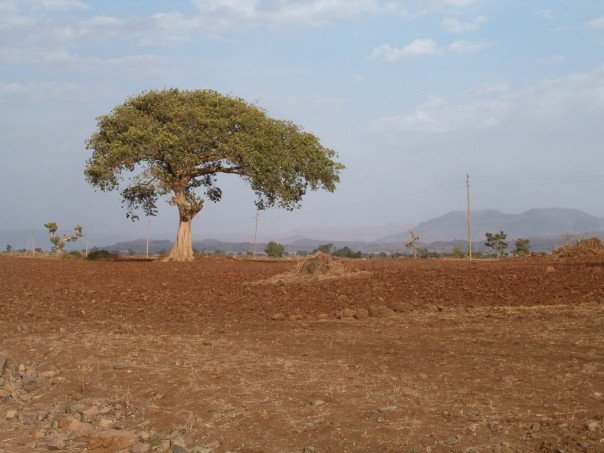
My newest article, “The Welfare Impacts of Commodity Price Volatility: Evidence from Rural Ethiopia,” coauthored with Chris Barrett and David Just, is finally available on the American Journal of Agricultural Economics‘ website.

Here is the abstract:

How does commodity price volatility affect the welfare of rural households in developing countries, for whom hedging and consumption smoothing are often difficult? When governments choose to intervene in order to stabilize commodity prices, as they often do, who gains the most? This article develops an analytical framework and an empirical strategy to answer those questions, along with illustrative empirical results based on panel data from rural Ethiopian households. Contrary to conventional wisdom, we find that the welfare gains from eliminating price volatility are increasing in household income, making food price stabilization a distributionally regressive policy in this context.

By “newest article,” I really mean “most recently accepted article,” for I have been working on this paper since early 2007. Because the paper innovates on both the theoretical and empirical fronts, and because it makes a point of fundamental importance for policy, I think this is my finest piece of research so far.

For a more complete discussion of this paper, see here.

Egypt’s Path to Democracy and Development, Part 1: Democracy

(Note: This is the first of a two-part guest post by Catherine Herrold, a PhD candidate at Duke University whose dissertation looks at the relationship between philanthropic foundations and the Egyptian revolution. The second part will be posted on Wednesday morning.)

Over the long term I am optimistic for Egypt. But our transition will last at least 10 to 15 years. In the meantime I am pessimistic.

This was a common sentiment expressed by civil society leaders during the first year of Egypt’s democratic transition. From January 2010 through July 2012, I conducted 75 interviews with staff of Egyptian NGOs, Egyptian philanthropic foundations, and international donors operating in Egypt. All felt that civil society had an important role to play in advancing Egypt’s political transition in the wake of the January 25, 2011 revolution.

None, however, predicted that the transition would be swift. Rather, they all agreed that while the revolution was sudden, substantive transformation would take time. They also pointed out that while change at the top levels of political power was crucial, reform would only be complete when marginalized groups were able to fully claim their economic, social, and political rights.

Yours Truly in the Pacific Standard

Nobody likes America’s agricultural policy. Not conservatives, not liberals, and not policy experts, who frequently use terms like “astonishingly irrational” to describe our system of federal subsidies for farming. So why is everyone so angry and shocked that last week’s laden farm bill—comprised of addendums to the same legislative package that Congress has been tagging since 1938—failed in the House of Representatives? Some reports describe a Farm Lobby Goliath smited by a tiny contingent of conservative House GOPers who are hellbent on shrinking the size of government no matter the objections of their fellow Republicans from farm country. But according to a new working paper by Duke economic policy researchers Marc Bellemare and Nick Carnes, it might not have been the all-powerful farm lobby that the House GOP subverted so much as a small contingent of American voters.

From an article by Michael Fitzgerald discussing my most recent working paper in the Pacific Standard, formerly known as Miller-McCune Magazine.

That said, although we find that electoral incentives seem to be the most consistent driver of congressional voting behavior on matters of agricultural protection, we still find evidence that lobbying (via the amount of contributions members of Congress receive from agricultural political action committees) and legislator preferences (via how much of their pre-Congress career the same members of Congress have spent working in agriculture) matter.