Last updated on November 25, 2011
According to an article in USA Today, the Hilton hotel chain is going to donate the partially used soap bars its customers leave behind to charity:
Hilton Worldwide has partnered with Atlanta-based nonprofit Global Soap Project to donate discarded soap from its 3,750 properties to be recycled for use in impoverished communities throughout the world.
In the first year of the partnership, the hotel chain expects to provide more than 1 million new 4-ounce bars of soap. Over the next three years, Hilton will also contribute $1.3 million to the effort.
Global Soap Project, founded by Uganda native Derreck Kayongo, uses a process of sanitizing, melting and remolding discarded soap from hotels throughout the country. Since 2009, the organization has sent recycled soap to 20 countries on four continents, including Afghanistan, Ecuador and Haiti.
Forgive my asking — and I am truly agnostic about this question — but isn’t this just another case of #SWEDOW (the acronym stands for “stuff we don’t want”)? Wouldn’t the recipient countries just be better off with the money made from selling the recyled soap in the US? Or from Hilton using its own (sanitized, melted, and remolded) discarded soaps and giving away the savings from doing so?
I haven’t visited that many sub-Saharan African countries (only Ethiopia, Madagascar, and Mali), but in all three places, I remember seeing soap that was made locally. Even if it were not dumping as per World Trade Organization rules, wouldn’t sending all that soap to those countries depress local industries? Is this really what we want?
Twitter for Dummies
When retweeted that article, someone on Twitter responded:
“SWEDOW or re-cycled product? Prefer Africa shea butter soap, but reality is soap in demand.”
Soap’s in demand? So is food. And when I pointed out that most African countries had their own soap-making industries, which this charity might well depress, that same person told me:
“as by-product bio-fuel industry — FOREIGN owned (to meet home country bio-fuel regs). Knee jerk criticism of RECYCLING wrong”
Right, because criticizing an entire industry because it is foreign-owned is not a knee-jerk reaction. Of course not.
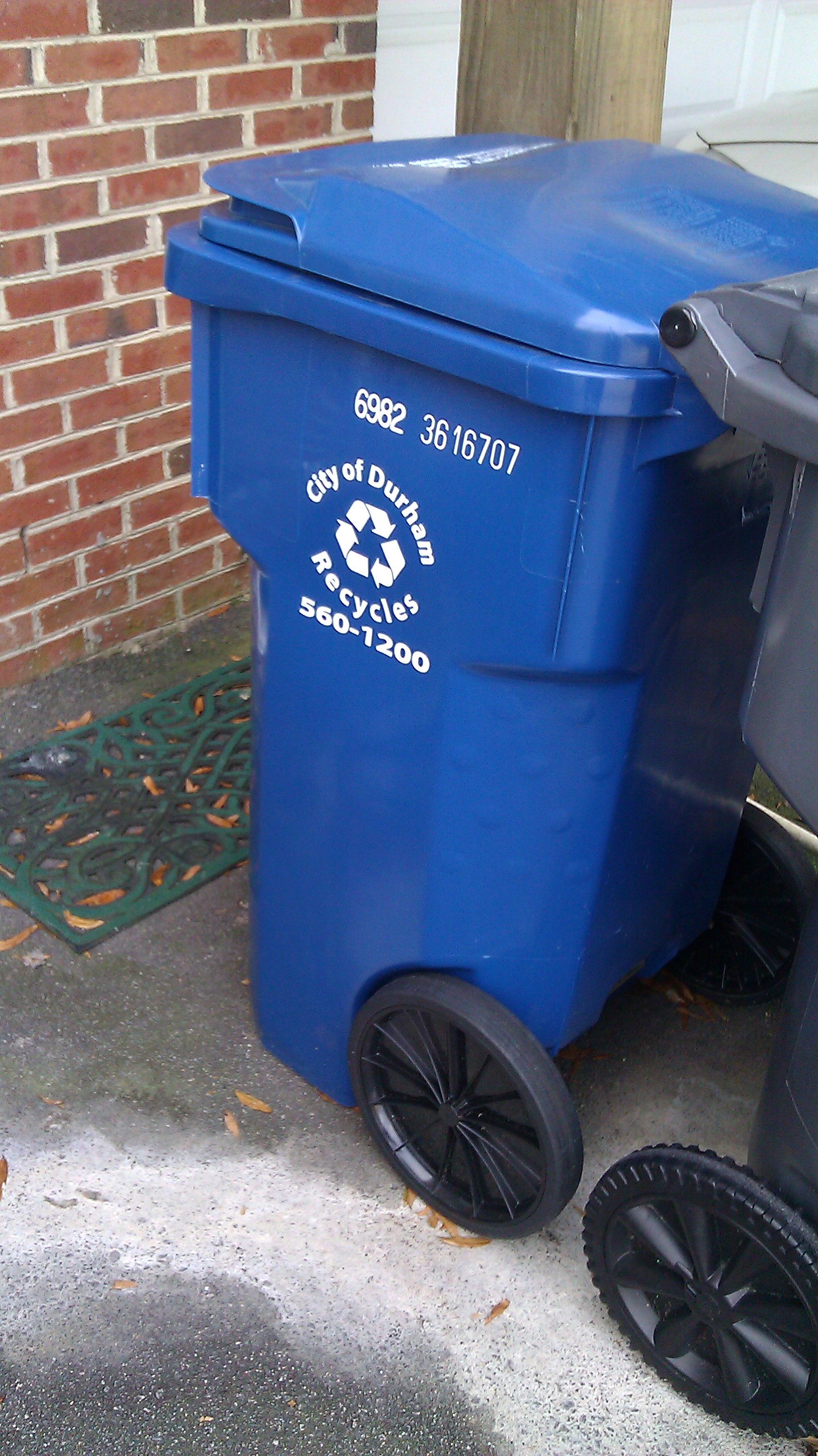
Lest anyone question my recycling cred, here is what’s in the back of our house:
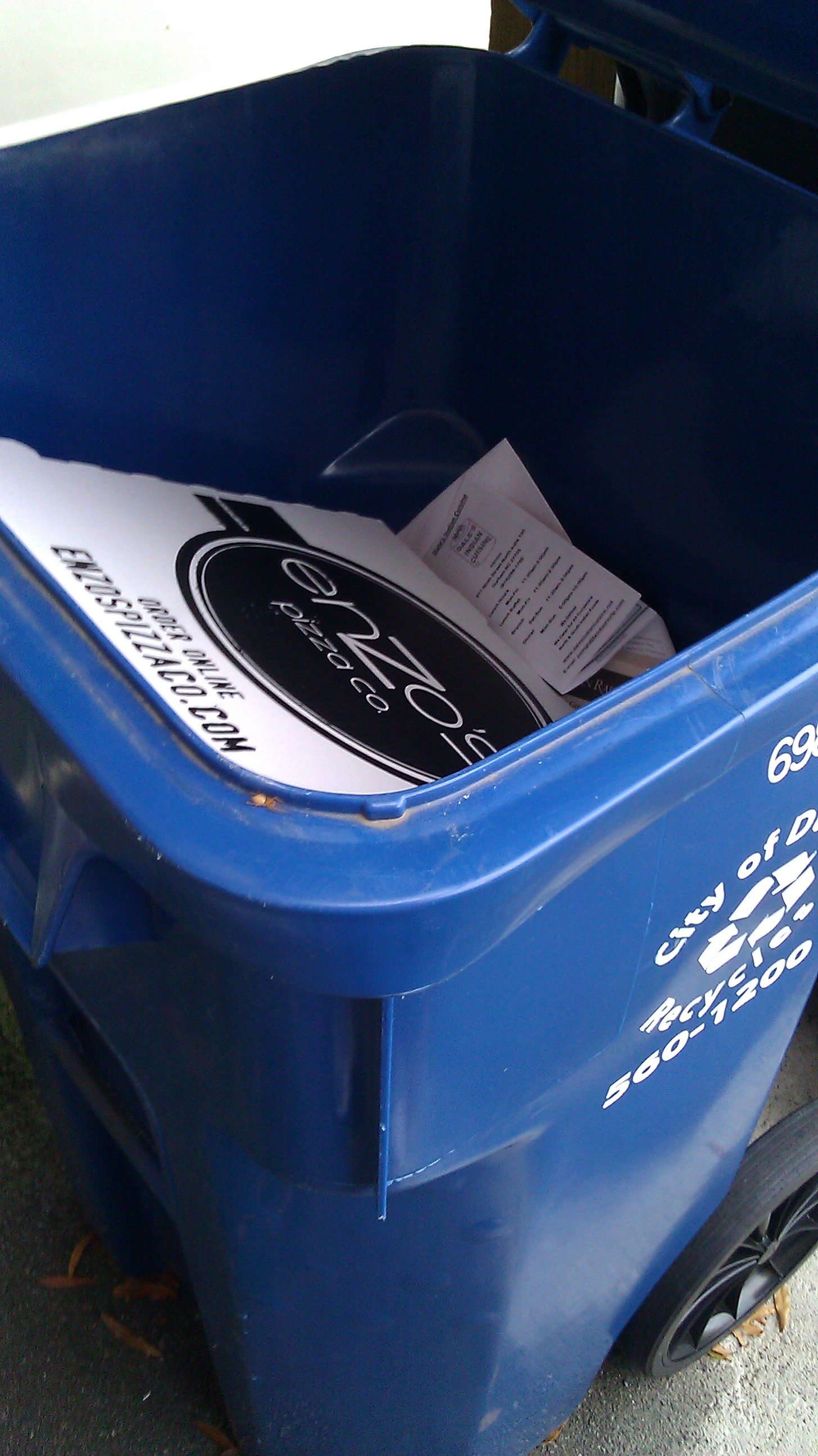
And here is what’s inside what’s in the back of our house:
Also, for anyone who would like to engage me in a conversation via social media, here is a bit of advice. Tweets like these:
“Guess academics can AFFORD cynicism”
“Suggest visit w/ Duke’s medical school and ask about connection SOAP and disease control…”
“Whatever happened to intellectual curiousity [sic]? Suggest study market dev early US – recycling/used goods stepping stones growth.”
Those tweets tell more about the twit that tweets them than they tell about my thoughts and thinking–especially when the twit that tweets them is cowardly comfortably hiding behind an anonymous Twitter account.
Hi Marc, I’m glad that the Global Soap story interests you! We have received many questions and comments that reflect the SWEDOW concerns, and address some of them in an article that details all of the avenues explored when we created our business plan and began building our operation.
http://www.globalsoap.org/our-cause/history/
One of the most common questions we receive is in regards to selling our soap in the United States – not from people that actually want to buy it, but from those who think we should sell it and send funds abroad. Bringing a product to market in the United States not only requires a massive investment of resources for things like packaging and distribution, but we must also overcome the marketing challenge of selling reprocessed soap. As you pointed out in your article above, most of us claim recycling “cred” by having a bin in the backyard. Purchasing and becoming brand loyal to reformatted soap may not appeal to such a large segment of the America public.
That being said, we sincerely welcome constructive feedback that will improve our operations as we grow. Please let me know if you’re interested in discussing your ideas!
Happy Holidays,
Beth Penland
Founding Board Member
Global Soap Project
Great post. I was just at a hotel last weekend and started wondering what they do with all the soap bits. I think hotels could gain some real “green” cred by reusing bits of soap. I think some hipster hotels could really embrace the concept. Soap is in demand in Africa, which makes it a GREAT product for small businesses (like the micro-enterpricses who receive our Spirit in Action Small Business grants) to sell. Rather than take away their market with free soap donations, how about supporting local markets instead?!
I don’t have much to add because I agree with everything you said (except I might replace the question mark at the end of SWEDOW with an exclamation point).
I just wanted to link to what I think is the best example I’ve seen of trying to approach someone implementing a similar project (it involved sending soap overseas, but not pre-used stuff from hotels). That’s an open letter that @ScottGilmore wrote to the founder of the Global Soap Project: http://buildingmarkets.org/blogs/blog/2011/06/21/an-open-letter-to-global-soap-project/
I appreciated the letter & thought it might be of interest because he’s not so critical as to burn the bridge, in my opinion, but he gets the point across. My reaction is typically to say the project isn’t valuable, and then move on. But, I/we need examples of positive engagement with folks who want to help, to help them do it in an effective (and respectful) way!
-Nathan
I think it’s SWEDOW, but as I blogged at the time, I also think that debating whether sending the soap is SWEDOW or not misses the point. The real question is how to get people to actually use the soap to regularly wash their hands, especially at key moments (after using the toilet and before eating etc). The Global Public-Private Partnership for Handwashing with Soap puts it simply: “Low rates of handwashing are rarely caused by a lack of soap. Soap is present in the vast majority of households worldwide, but it is commonly used for bathing and laundry, not for handwashing”. Full post at: http://wp.me/p1jV1a-3v
Oi, I see now that Mr. Gilmore’s letter was, in fact, to the very same effort – in any case, I was hoping to highlight his methodology more than anything else. Sorry for the careless error!
I’m curious if Marc or anyone else has particular reactions as to whether his approach is effective or not…
-Nathan
Thanks for the comments, everyone. Stephen and Nathan, I will read this carefully and respond sometime this weekend, after my wife and I are done with Thanksgiving. Beth, I will follow up with you via email sometime soon. Thanks everyone for commenting! I’m glad my post has made some waves. Happy Thanksgiving, everyone!
SWEDOW leads to TWEDOW (Tweets We Don’t Want)