(Note: This is a guest post from my friend, colleague, and coauthor Christine Moser, who is an associate professor of economics at Western Michigan University, and whose research agenda lies at the intersection of development economics and environmental economics.)
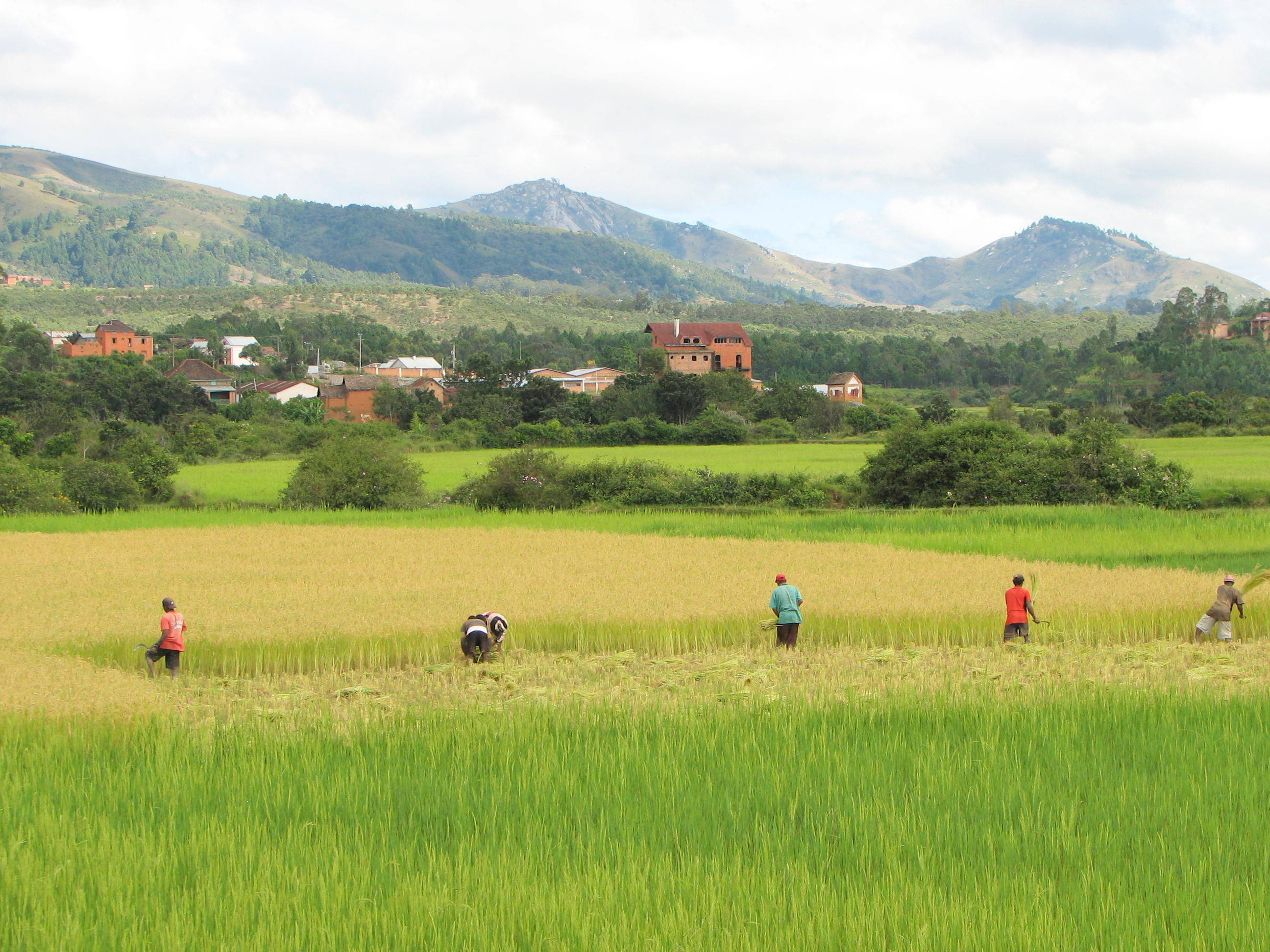
Rice Cultivation in Ambositra, Madagascar (Source: WikiMedia Commons).
Proponents of SRI tout not just the yield gains derived from the technique, but the fact that SRI does not require purchased inputs such as chemical fertilizer or improved seeds, and therefore should be accessible to the poor. SRI can also greatly reduce water use, a huge advantage in some parts of the world.
Onward and Upward!
I am very happy to announce that I will be be joining the Department of Applied Economics at the University of Minnesota next summer.